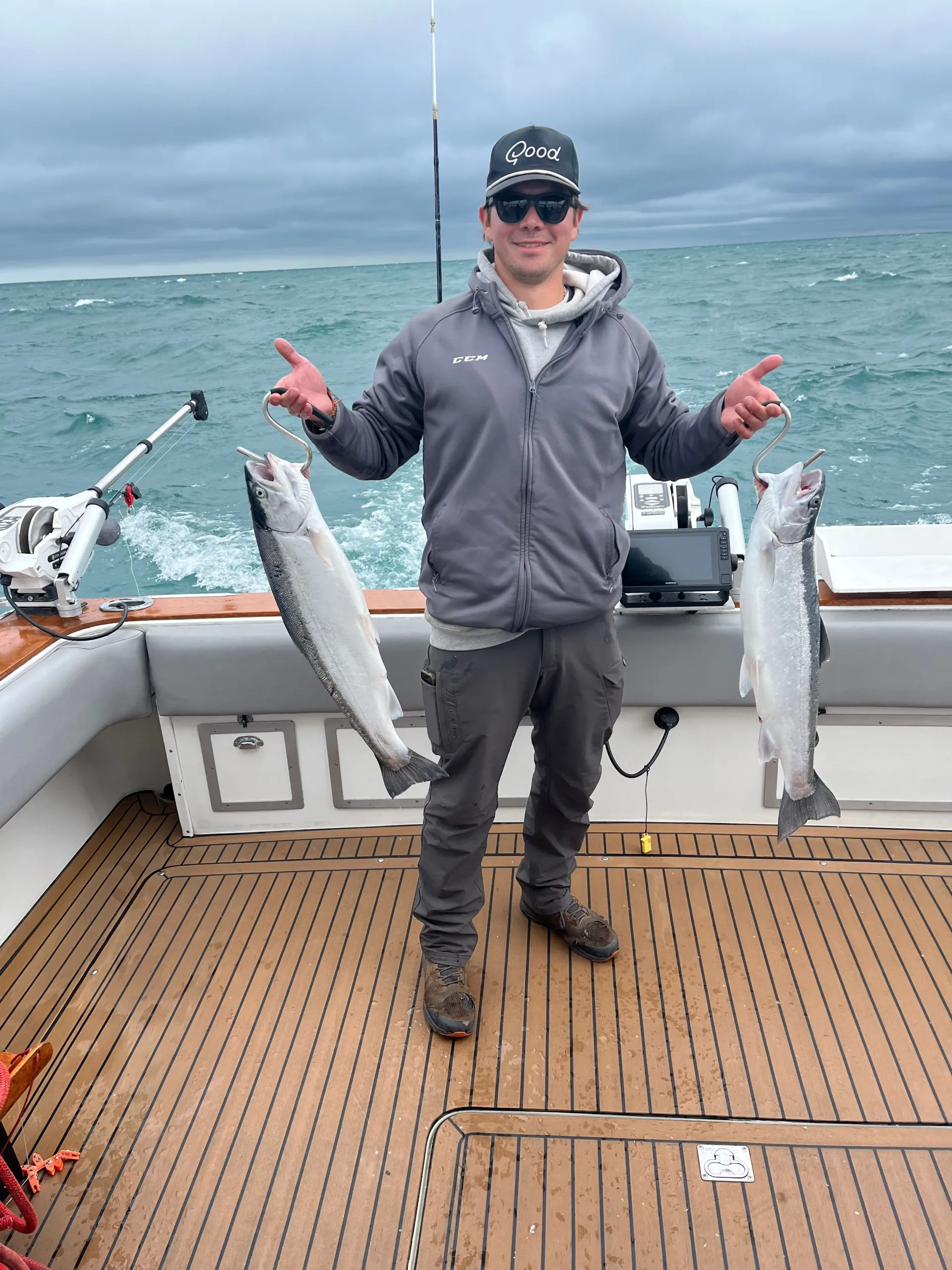
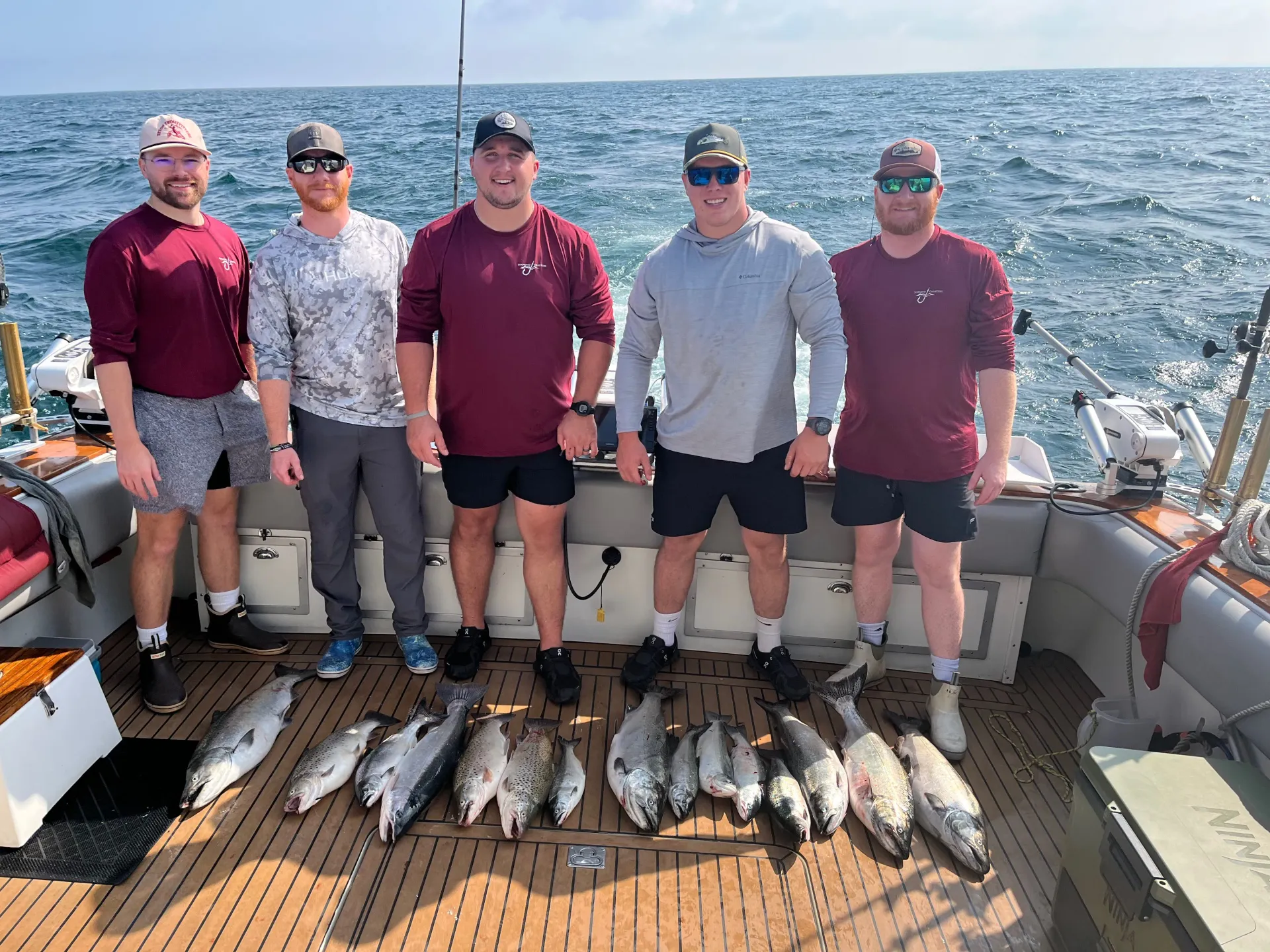
Sodus Point King Salmon Fishing: Best Time, Techniques and What to Expect

Published: November 18, 2026
Sodus Point sits on the eastern shore of Lake Ontario, where deep water, offshore structure, and seasonal baitfish movements create strong opportunities for targeting King Salmon. Sodus Point King Salmon Fishing becomes especially important from summer into early fall, when Chinook Salmon are actively feeding and preparing for their seasonal movements. Successful trips often depend on finding the right combination of depth, water temperature, baitfish, and temperature breaks. The thermocline can help identify where suitable water conditions are holding fish, but its depth can change with weather and lake conditions. Wind, current, temperature changes, and bait movement can also shift fish from one area or depth to another. For that reason, King Salmon fishing requires more than simply reaching the lake and setting lines. The daily conditions help determine where the fish are holding and how the spread should be presented.
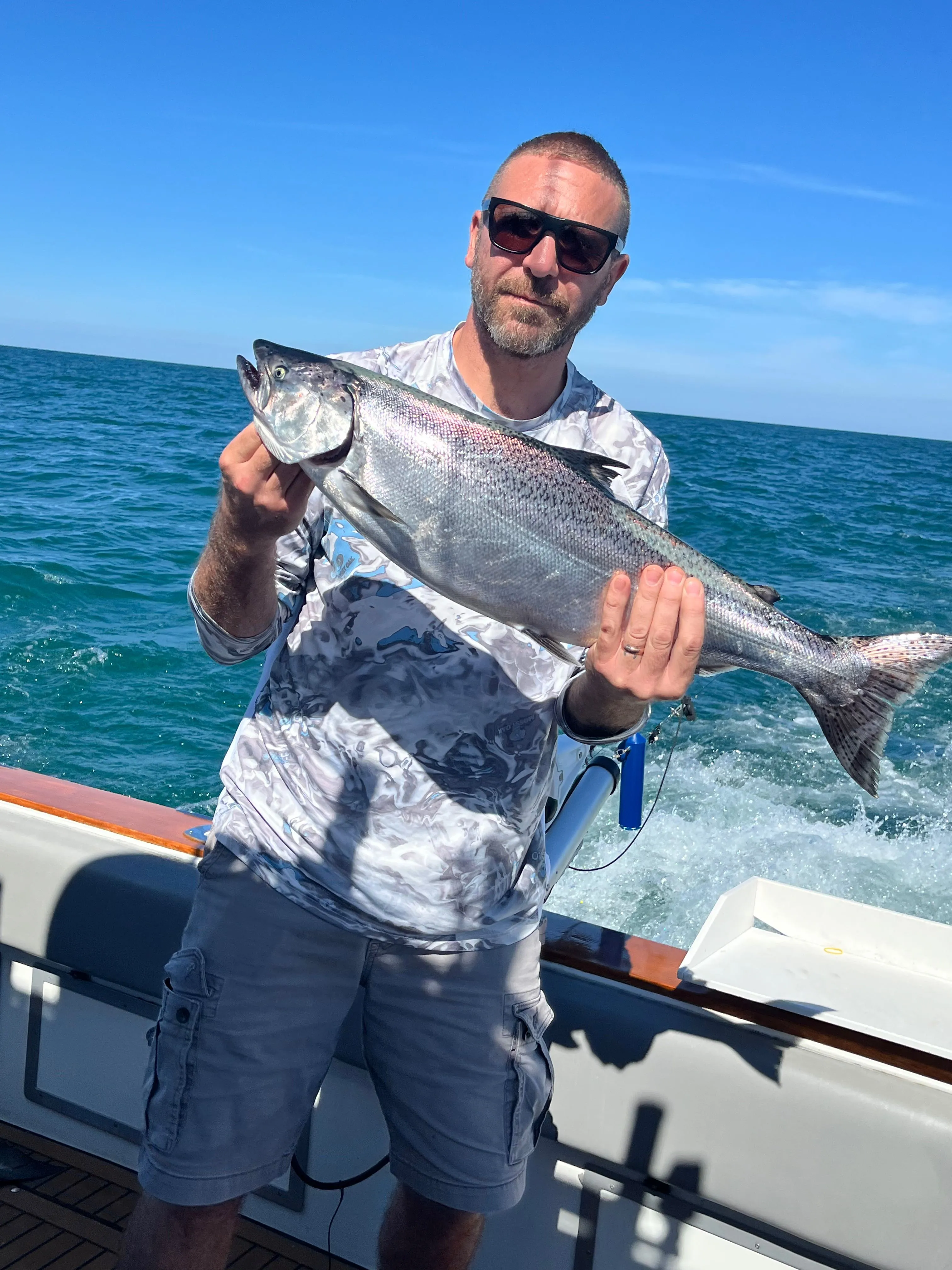
When Is the Best Time for Sodus Point King Salmon Fishing?
The best time for Sodus Point King Salmon Fishing follows seasonal changes in water temperature, baitfish movement, salmon depth, and lake conditions. Activity begins building in spring, becomes stronger through summer, and often remains productive into early fall.
Spring
Spring marks the transition from trout and early salmon fishing toward increasing King Salmon activity. An April 18, 2026 fishing report noted that Kings were expected to begin moving in soon as steady spring fishing continued.
- Why It Is Best: Rising water temperatures and increasing baitfish activity can bring Kings into the area as the seasonal pattern develops.
- How to Catch Them: Troll through productive temperature zones with spoons, plugs, or other salmon presentations while adjusting depth as water conditions change.
Summer
Summer is a major period for King Salmon as warmer conditions, offshore baitfish, deeper water, and developing thermoclines influence their location. May through September is identified as a strong seasonal period for Kings, Coho, and Steelhead.
- Why It Is Best: The thermocline and temperature breaks can create productive zones where salmon find suitable water and forage.
- How to Catch Them: Trolling at varying depths helps locate Kings around temperature breaks, bait concentrations, and deeper sections of Lake Ontario.
Fall
Late summer and early fall, particularly August and September, are traditionally important for targeting larger King Salmon around Sodus Point. Cooling water can gradually change their depth and location.
- Why It Is Best: Seasonal cooling and changing salmon behavior can create opportunities to target larger Kings before their fall movements.
- How to Catch Them: Troll around temperature changes and deeper holding areas, then adjust lure depth and presentation as salmon respond to changing water conditions.
Where Do King Salmon Hold Around Sodus Point?
King Salmon around Sodus Point do not stay at one fixed depth throughout the season. Their location can change with water temperature, baitfish movement, lake conditions, and the development of temperature layers. For King Salmon fishing Lake Ontario, reading these changing conditions is often more useful than relying on a predetermined fishing depth.
- Deep Offshore Water: As summer progresses, Kings often move toward deeper offshore water where suitable temperatures and abundant baitfish are available. Depth can change with weather and daily lake conditions, so anglers need to adjust their presentation accordingly.
- The Thermocline: The thermocline is a layer where water temperature changes rapidly with depth. It can create distinct temperature zones that attract baitfish and provide suitable conditions for salmon, making it an important reference when determining where to place lines.
- Temperature Breaks: A captain may look for noticeable changes in water temperature rather than fishing one fixed depth. These breaks can indicate areas where salmon may be holding or feeding.
- Baitfish Concentrations: King Salmon often stay near available forage. Finding concentrated baitfish can therefore provide an important clue when determining where salmon may be holding.
What Techniques Work for King Salmon Fishing on Lake Ontario?
Successful Lake Ontario King Salmon fishing often depends on adjusting the presentation to the depth, temperature, bait activity, and fish location found during the trip.
Trolling
Trolling is central to King Salmon fishing because it lets anglers cover water, test multiple depths, vary speed, and follow temperature breaks while searching for productive salmon-holding areas.
- Why It Is Best: It covers more water and allows the captain to test different depths, speeds, and temperature breaks rather than staying stationary.
- Correct Way to Use It: Adjust trolling speed, lure depth, and direction as conditions change, focusing the spread around productive water and active fish.
Downriggers
Downriggers give anglers precise control over lure depth, making them useful for presenting baits near salmon holding around the thermocline, temperature breaks, and deeper water.
- Why It Is Best: They allow controlled presentations at specific depths, which is useful when Kings are concentrated near a thermocline.
- Correct Way to Use It: Set the downrigger based on observed fish depth, temperature, and water conditions, then adjust it as salmon locations change.
Planer Boards
Planer boards spread trolling lines away from the boat, helping anglers cover more water and present different lures across separate paths and depths simultaneously.
- Why It Is Best: They increase the area covered and help keep presentations away from the boat.
- Correct Way to Use It: Run different lures or depths across the spread and adjust their positions based on fish activity.
Adjusting the Spread
Adjusting the spread keeps the presentation responsive to changing depth, temperature, bait activity, fish location, wind, and trolling speed throughout the fishing trip.
- Why It Is Best: Flexible presentations help respond to changing Lake Ontario conditions.
- Correct Way to Use It: Change depth, speed, lure position, or spread spacing when conditions indicate that salmon have shifted.
What Baits and Lures Are Used for Chinook Salmon?
Successful Chinook Salmon fishing Sodus Point is less about relying on one specific lure and more about matching the presentation to salmon depth, water conditions, and available forage.
- Trolling Lures: Spoons, plugs, and other trolling presentations can be used for Chinook Salmon. The right choice depends on the depth being fished, water conditions, bait activity, and how salmon are responding.
- Matching the Depth: Lure selection matters, but getting the presentation into the depth where salmon are holding can be just as important. Downriggers and other trolling equipment help control presentation depth.
- Matching the Forage: Baitfish activity can influence lure size, color, profile, and movement. When forage is concentrated at a particular depth, matching the presentation to those conditions can make the spread more relevant.
- Changing the Presentation: If salmon are not responding, anglers can adjust trolling speed, lure depth, spacing, or position within the spread. These changes help keep the presentation aligned with current conditions.
How Do Water Conditions Affect King Salmon Fishing?
Water conditions can quickly change the pattern during Sodus Point salmon fishing. Water temperature helps identify different layers and temperature breaks where King Salmon may find suitable conditions. During summer, the thermocline can create a distinct depth zone where temperature changes rapidly, while concentrated baitfish can provide another useful clue about where salmon are feeding. These factors help determine where the spread should be placed and which depths deserve attention.
Wind and weather can also influence the lake throughout the day. Wind may change surface conditions and affect water movement, while changing weather can shift temperature patterns and baitfish locations. Because these factors interact, a productive depth or area on one day may not produce the same results the next. Reading current conditions helps anglers adjust their approach rather than relying on fixed patterns.
What Should You Bring for a King Salmon Charter?
A little preparation can make a King Salmon charter more comfortable and help you stay ready for changing conditions on Lake Ontario. Guests should bring a few personal items while the fishing equipment is provided on the charter.
- Valid New York Fishing License: Obtain a valid New York State fishing license before the trip.
- Large Cooler: Bring a large cooler for transporting your cleaned and packed catch.
- Soft-Soled Shoes: Non-marking, soft-soled shoes are recommended for safety and to protect the boat's surface.
- Sun Protection: Pack sunscreen, sunglasses, and other suitable protection for extended time outdoors.
- Weather-Appropriate Clothing: Bring layers and weather gear suited to the forecast and changing lake conditions.
- Motion Sickness Medication: If you are prone to motion sickness, bring appropriate medication and take it according to its directions.
What Can You Expect on a Sodus Point Salmon Charter?
A day on Lake Ontario can change with the season, water conditions, and location of the fish. Diamond J Charters provides guided trips from Sodus Point with Captain Jim Del Real, who has more than 35 years of Lake Ontario fishing experience.
A Sodus Point salmon charter offers five-hour half-day and eight-hour full-day options for up to six anglers. The boat is equipped with professional rods, reels, tackle, downriggers, and planer boards for different trolling presentations and depths. Trips can target King Salmon, Coho, Steelhead, and trout depending on the season and conditions. Fish cleaning, filleting, and packing are included after the trip. Anglers need a valid New York fishing license before departure. The captain can adjust the fishing approach based on water temperature, bait activity, salmon location, and changing lake conditions.
Conclusion
The strongest seasonal window for King Salmon around Sodus Point generally runs through summer and into early fall, with late summer and September offering an important period for anglers targeting larger Kings. During this time, the thermocline, temperature breaks, baitfish activity, and deeper water can influence where salmon hold and feed.
Trolling remains central to the approach because it allows anglers to cover water, test different depths, and adjust presentations as conditions change. Downriggers and planer boards help control depth and spread lines across productive water. Water temperature, wind, bait activity, and daily lake conditions can all change the pattern, making adjustments important throughout the trip.
For anglers planning a Sodus Point salmon charter, Diamond J Charters provides guided Lake Ontario fishing with experienced local knowledge and the equipment needed for changing conditions. Contact us to plan your trip around the seasonal King Salmon pattern.
FAQs
- When is the best time for Sodus Point King Salmon fishing?
Summer through early fall is an important seasonal window, with August and September traditionally offering productive opportunities for targeting larger King Salmon around Sodus Point. - What months are best for King Salmon fishing on Lake Ontario?
May through September can provide strong seasonal opportunities for King Salmon, Coho, and Steelhead, with summer and early fall offering favorable conditions for salmon fishing. - Where do King Salmon hold around Sodus Point?
King Salmon may hold in deeper offshore water near suitable temperatures, temperature breaks, thermoclines, and baitfish concentrations. Their location can change with daily lake conditions. - How deep do you fish for King Salmon on Lake Ontario?
Fishing depth varies with water temperature, thermocline development, baitfish location, and salmon position. Captains adjust lure depth rather than relying on one fixed depth throughout the season. - What is the thermocline and why does it matter for salmon fishing?
The thermocline is a layer where water temperature changes rapidly with depth. During summer, it can help identify water zones where salmon and baitfish may concentrate. - What techniques are used for Chinook Salmon fishing in Sodus Point?
Trolling is a primary technique, often combined with downriggers and planer boards. Anglers adjust speed, depth, lure position, and spread based on salmon location and water conditions. - Are downriggers used for Lake Ontario King Salmon fishing?
Yes. Downriggers allow anglers to present lures at controlled depths, making them useful when targeting Kings around specific temperature zones, thermoclines, and deeper offshore water. - What should you bring on a Sodus Point salmon charter?
Bring a valid New York fishing license, large cooler, soft-soled shoes, sun protection, weather-appropriate clothing, and motion sickness medication if needed. - How long is a King Salmon fishing charter with Diamond J Charters?
Diamond J Charters offers five-hour half-day and eight-hour full-day fishing options from Sodus Point. Trips can target King Salmon and other seasonal species. - Can beginners go King Salmon fishing from Sodus Point?
Yes. Beginners can join a guided trip with the necessary fishing equipment provided. The captain can adjust techniques and presentations based on conditions and the group's experience level.